
 Image 1 of 1
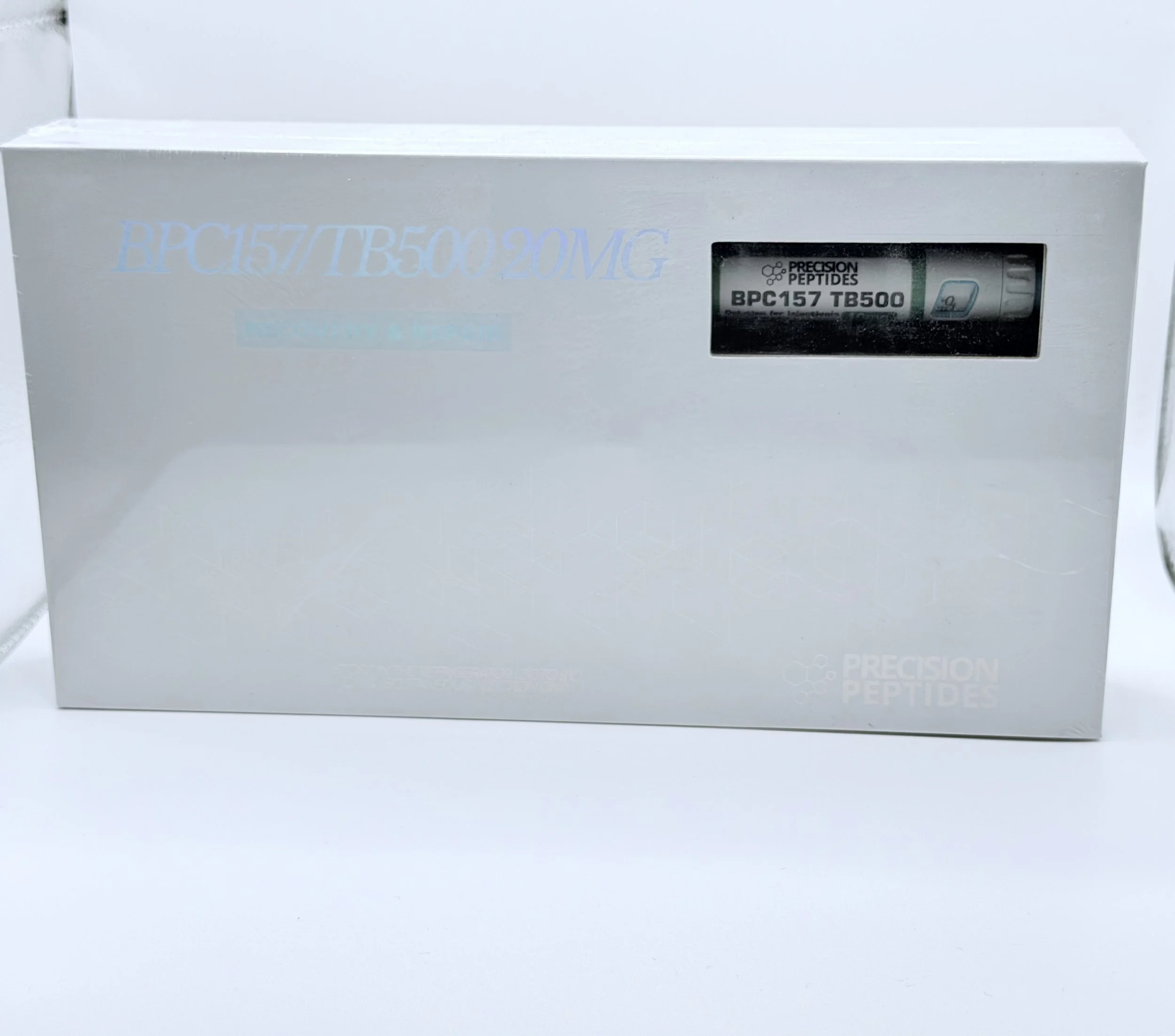
BPC‑157 (Body Protection Compound‑157) is a synthetic peptide derived from a protective protein found in the stomach.
May accelerate healing of tendons, ligaments, muscles, and skin
Animal studies show improved recovery from tendon ruptures and muscle tears
Demonstrates strong gastroprotective effects
May help with ulcers, gut lining repair, and inflammation in animal models
Appears to lower inflammatory markers
Supports recovery from overuse injuries
Some studies suggest protection of nerve tissue after injury
May support nerve regeneration (animal data)
Promotes angiogenesis (formation of new blood vessels)
May improve blood flow to injured tissues
TB‑500 is a synthetic version of a peptide naturally produced in the thymus gland. It is associated with cell migration, repair, and angiogenesis.
May promote repair of muscle, tendon, and ligament injuries
Often used alongside BPC‑157 in anecdotal recovery protocols
Encourages actin production, aiding cell movement and tissue remodeling
Shows anti‑inflammatory effects in animal studies
May support recovery from chronic soft‑tissue injuries
Animal research suggests potential protection and healing effects on heart tissue after injury
Users often report easier movement and reduced stiffness during recovery
intended strictly for laboratory research use and is not for human consumption or clinical application.
BPC‑157 (Body Protection Compound‑157) is a synthetic peptide derived from a protective protein found in the stomach.
May accelerate healing of tendons, ligaments, muscles, and skin
Animal studies show improved recovery from tendon ruptures and muscle tears
Demonstrates strong gastroprotective effects
May help with ulcers, gut lining repair, and inflammation in animal models
Appears to lower inflammatory markers
Supports recovery from overuse injuries
Some studies suggest protection of nerve tissue after injury
May support nerve regeneration (animal data)
Promotes angiogenesis (formation of new blood vessels)
May improve blood flow to injured tissues
TB‑500 is a synthetic version of a peptide naturally produced in the thymus gland. It is associated with cell migration, repair, and angiogenesis.
May promote repair of muscle, tendon, and ligament injuries
Often used alongside BPC‑157 in anecdotal recovery protocols
Encourages actin production, aiding cell movement and tissue remodeling
Shows anti‑inflammatory effects in animal studies
May support recovery from chronic soft‑tissue injuries
Animal research suggests potential protection and healing effects on heart tissue after injury
Users often report easier movement and reduced stiffness during recovery
intended strictly for laboratory research use and is not for human consumption or clinical application.